
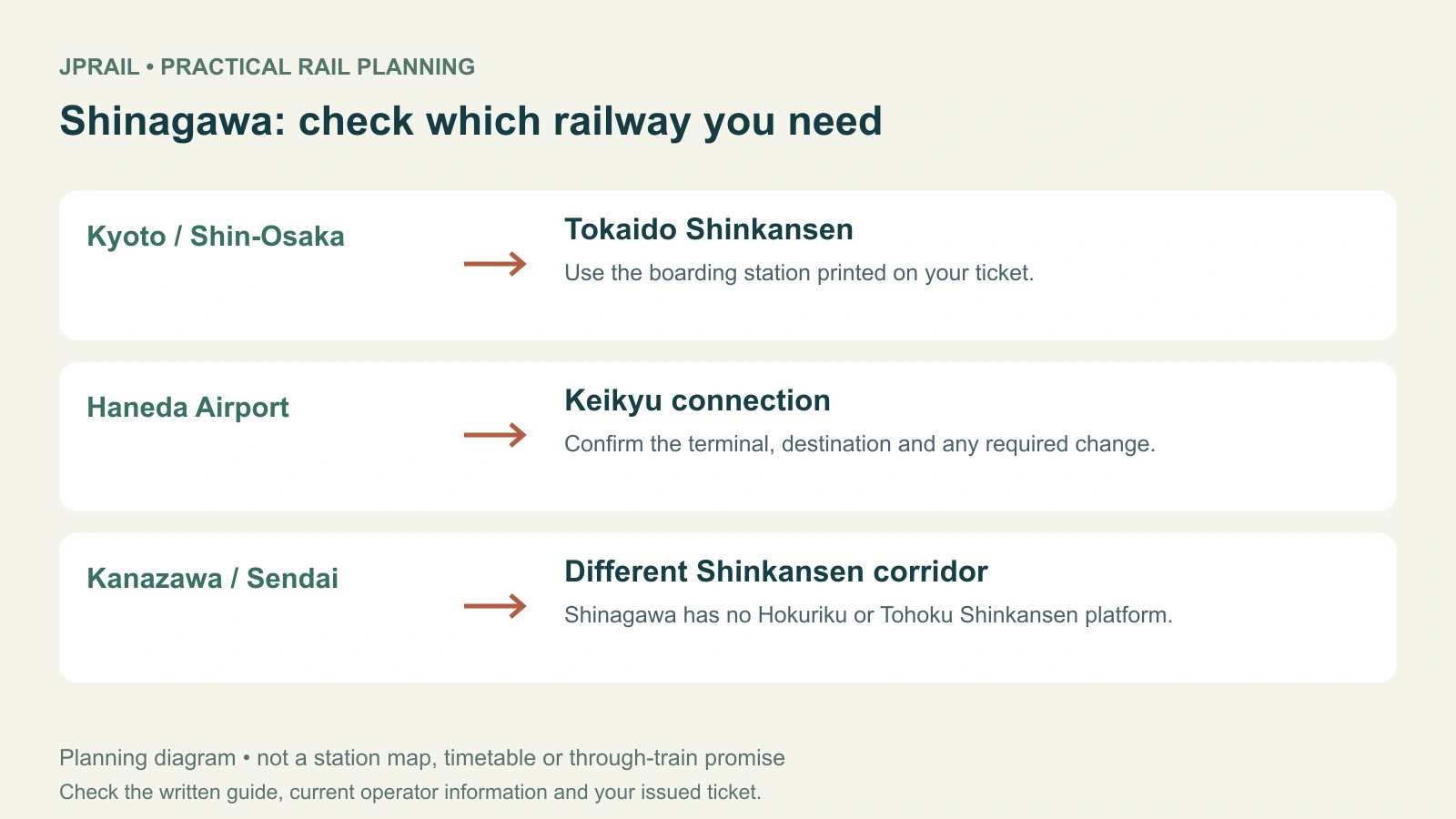
Shinagawa is a Tokaido Shinkansen station in southern central Tokyo, with JR local connections and Keikyu trains towards Haneda Airport. It can be a practical gateway for Kyoto and Osaka when you are staying in south Tokyo. It is a different station from Tokyo and Shin-Yokohama.
Which Shinkansen services use Shinagawa?
Tokaido services connect Shinagawa with destinations including Nagoya, Kyoto and Shin-Osaka. Some continue onto the Sanyo corridor. Northern routes such as the Tohoku and Hokuriku Shinkansen do not depart from Shinagawa: use the station named on that reservation. Read the network guide before choosing a station just because it is near your hotel.
Konan or Takanawa: choose the correct side
Konan is the east side, useful for offices and the Intercity area. Takanawa is the west side, associated with many hotels and Keikyu access. Your destination’s street address matters more than choosing the nearest-looking exit on a small map. Station works can alter access paths, so use current signs and the latest operator map. Avoid relying on old platform numbers or an exact gate-to-gate walking time.
Transferring from JR local trains
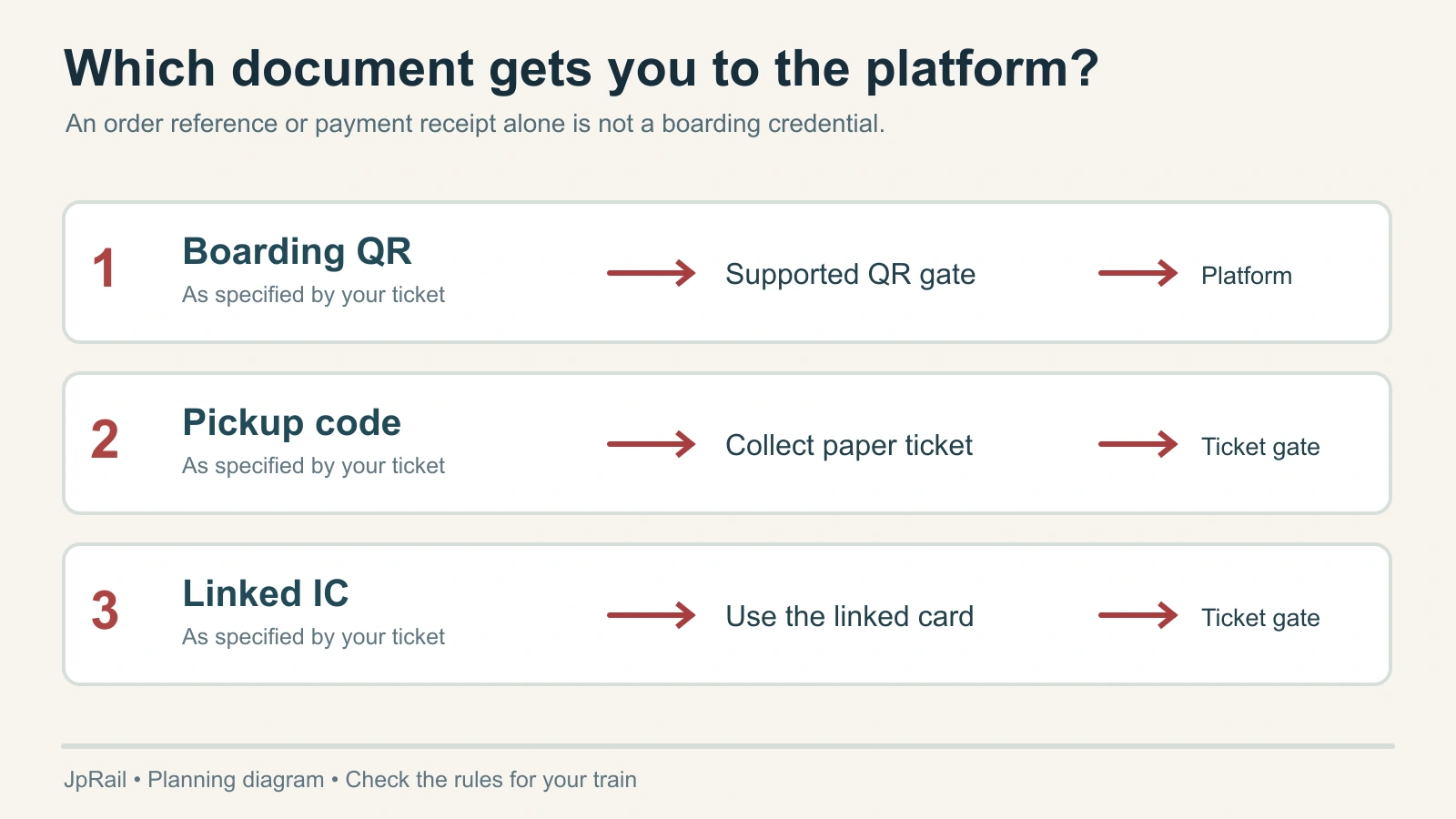
After leaving your local platform, follow signs for the Tokaido Shinkansen transfer gates. Check whether your boarding method requires a paper ticket, a linked IC card or a supported QR code. Keep the local-travel card available if it is needed to settle that leg. If the gate rejects the combination, ask staff instead of repeatedly scanning unrelated codes. The boarding instructions guide explains common ticket-format differences.
Connecting with Haneda Airport via Keikyu
Follow Keikyu signs and choose a service that reaches your airport terminal. Train destinations and transfer requirements can vary. Haneda Terminal 3 and the Terminal 1–2 station are different stops; confirm the airline terminal before travelling. Coming from a flight, allow for immigration, baggage collection and delays before fixing a Shinkansen departure. See Haneda train connections for the alternatives.
Allow time for bags, collection and lifts
Around 30 minutes before a Shinkansen departure is a useful first-visit station buffer, with extra time if you need ticket collection or assistance. This is a planning allowance, not an official minimum connection. Lifts may involve a longer route than escalators, and lockers cannot be assumed to have space. Keep your train number, car and seat available offline to reduce last-minute searching.
Check the station printed on your booking
A Tokyo departure and a Shinagawa departure should not be treated as interchangeable without checking the ticket terms. Choose the correct station in the booking process and confirm it on the issued document. For a first journey to Kansai, combine this station guide with Tokyo-area to Kyoto planning, then search your actual starting station and date.
A hotel departure starts with the correct side
Find the hotel's address relative to the station and compare it with the current official station map. Konan and Takanawa are opposite sides of the complex; choosing the wrong approach adds unnecessary walking. A taxi drop-off description should include the relevant side and intended railway rather than just “Shinagawa.”
If you are coming from a local platform, plan a railway transfer instead of a street entrance. These are different starting points. Keep the local card or ticket available alongside the Shinkansen document, especially where a transfer gate handles the two journeys together.
From Haneda to a reserved Shinkansen
Check your selected Keikyu service's route and destination at the airport. On arrival at Shinagawa, follow current transfer signs and the boarding instructions for the long-distance ticket. Include walking, possible collection queues and the time needed to find the assigned car.
A flight's scheduled landing time is too early a starting point for a tight rail connection calculation. Immigration and bags are still ahead. If the flight is delayed, contact the seller about the existing reservation before buying a duplicate or assuming you may board a later train in the same class.
Which journeys cannot start here?
Shinagawa serves the Tokaido Shinkansen. It is not a departure station for the northern or Hokuriku Shinkansen corridors to destinations such as Sendai or Kanazawa. If your ticket starts at Tokyo, confirm that route instead of treating Shinagawa as an interchangeable Tokyo-area bullet-train hub.
For a Kyoto-bound ticket, verify whether the reservation actually starts at Shinagawa or Tokyo. Even where a train calls at both, ticket validity and boarding conditions must be checked. Do not change the boarding station solely because an online map shows the same train passing through.
At the gate and on the platform
First match the line and direction, then the service name and number and departure time. The board's final destination may be beyond your stop. Once the correct platform is confirmed, locate the car marker and have the family and bags ready without obstructing the queue.
If the gate rejects the ticket, use the staffed area. Explain whether you arrived by Keikyu, JR or from the street and present the local entry method and Shinkansen document. Repeatedly scanning unrelated codes or switching cards does not establish validity and can make the problem harder to resolve.
Official planning resources
- JR Central: ticket types and fares
- JR East: routes, stations and travel information
- Keikyu: Haneda Airport access and route search
Editorial review: 10 October 2026. Check the current operator instructions and your issued product before travel.