
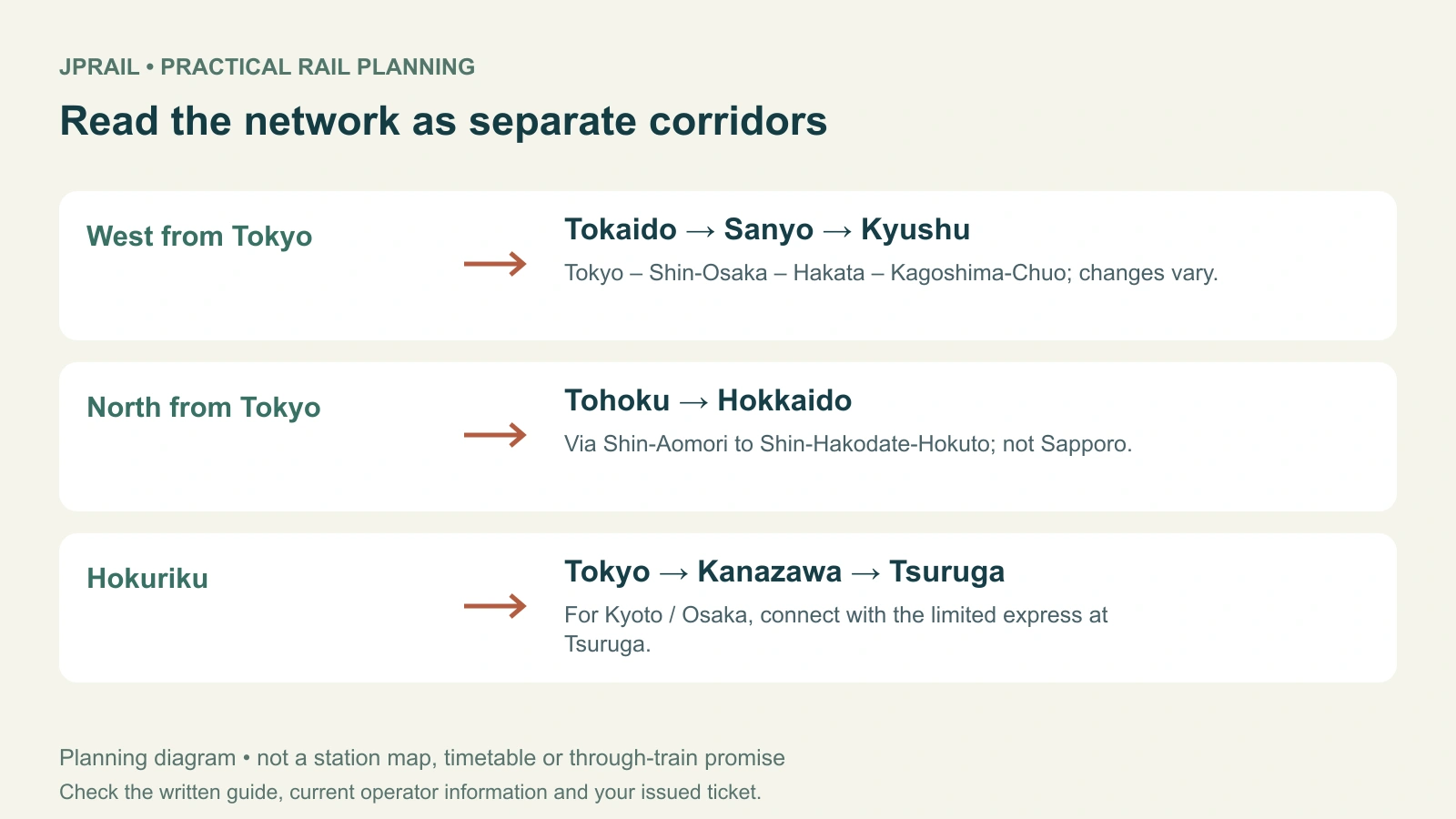
Selected Nozomi services connect Hiroshima directly with Tokyo over the Sanyo and Tokaido Shinkansen lines. A direct journey takes roughly four hours as a planning guide; the exact duration depends on the departure. Other train combinations can require a transfer and take longer.
Direct Nozomi or a connecting journey
A direct departure keeps you in the same train through Shin-Osaka and avoids moving luggage between platforms. Connecting options may combine a Sanyo service with a Tokaido service. Check the complete itinerary: a short first leg does not mean a short overall journey. Compare the total duration, connection time, available seats and ticket conditions for the actual date.
Boarding at Hiroshima Station
Allow time to reach the Shinkansen area from your hotel or a local service. Follow the departure display for the train name, number, destination and platform, then queue at the car position shown on your reservation. If returning from Miyajima first, add time for the ferry and local railway. Do not schedule an intercity departure around the shortest possible sightseeing connection. Our Hiroshima rail guide provides local planning context.
Tokyo or Shinagawa for your final stop
Some travellers find Shinagawa more convenient for south Tokyo or Haneda access; Tokyo Station is useful for other city districts and northern rail connections. Choose the arrival station deliberately when booking. Do not assume an early exit, onward local travel or a change of arrival station is included with every product. See the Shinagawa guide and the instructions on your issued ticket.
Tickets and Japan Rail Pass conditions
Compare the full fare for the selected departure and cabin. A nationwide Japan Rail Pass does not cover Nozomi under its ordinary conditions alone: eligible pass holders need the separate special Nozomi/Mizuho ticket for the relevant journey. Alternatives using covered services can involve changes and longer travel time. Regional passes have different coverage. Review the pass comparison and current official terms before buying.
Seats, large bags and a long journey
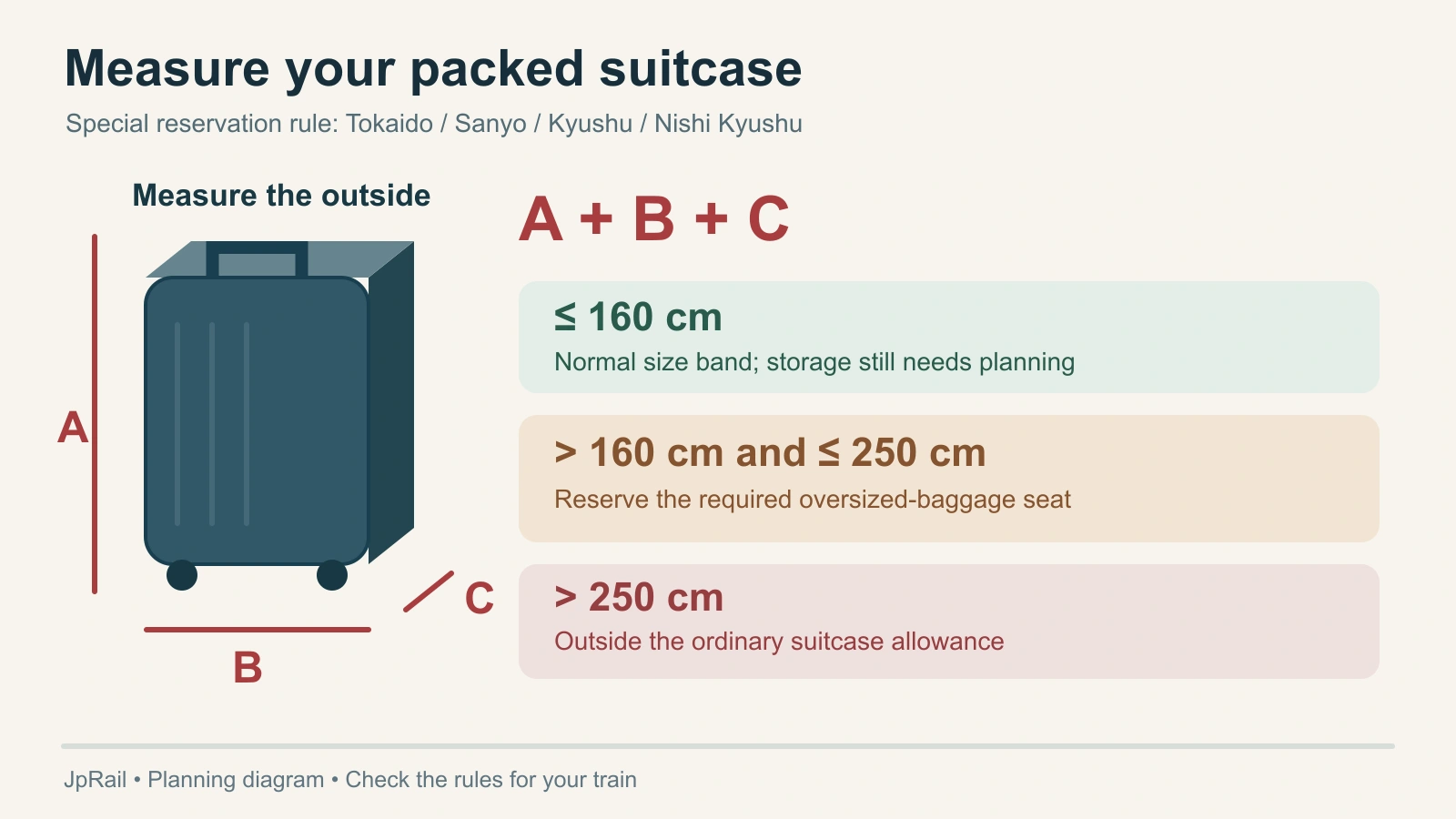
For several hours onboard, consider an assigned seat and keep food, water and essentials within reach. Measure suitcases in advance. Applicable oversized-baggage arrangements on the Sanyo and Tokaido corridor must match the booked train and seat; an ordinary seat preference does not reserve baggage space. Use the luggage guide and check the current product before payment.
Allow room before a flight or another reservation
The train journey ends at a city station, not at the airport. Add the airport transfer, terminal walk and airline check-in margin when planning an onward flight. Weather or service disruption can affect even a direct train. If missing the connection would be costly, consider travelling to Tokyo earlier or staying overnight. For the reverse direction, use the separate Tokyo to Hiroshima route guide.
Choose the Tokyo arrival station for the next leg
Tokyo and Shinagawa can both be relevant on a through Tokaido–Sanyo journey, but they are not interchangeable hotel locations. Compare the exact stop served by your train with your final address. Shinagawa may suit parts of south Tokyo or a Keikyu connection toward Haneda, while Tokyo may suit other districts or a northern Shinkansen transfer.
Before buying, search the actual station you plan to use. For a same-day flight, include the onward airport train, walking, baggage and the airline's required airport arrival time. A Shinkansen arrival at Tokyo does not mean you have reached either Narita or Haneda.
Work through a direct-versus-connecting comparison
Start with a direct service that actually operates on your travel date. Then compare any connection offered by your planner, including the change station and the class on both trains. A seemingly attractive first leg is not a complete itinerary if the onward train has no suitable seats.
For a traveller with large bags, fewer transfers can be worth more than a small saving. For a nationwide pass holder, compare covered alternatives with the applicable Nozomi special-ticket option and all conditions. Do not presume the fastest direct service is covered by the pass alone. Use the complete journey total rather than comparing one segment with the full direct fare.
Prepare for a long onboard stretch
Keep water, food if wanted, medication, charging equipment and a light layer in a small bag you can reach without opening the main suitcase. Check the facilities for the actual train rather than relying on a promise of onboard retail or a power outlet at your particular seat. Buy essentials before boarding if their availability matters.
Measure large suitcases and confirm the appropriate oversized-baggage seat arrangement for the booked journey. A transfer can mean a different car and storage arrangement on the next train. For families, check all issued seat assignments and decide which adult will handle the bags and which will supervise the children at each change.
If the railway is disrupted on travel day
Check the operator's live information before leaving your accommodation and again at the station. Determine whether the problem affects your train, a connecting service or only the final local leg. Keep the seller's contact details with the issued tickets so you can ask about the correct change procedure.
If reaching Tokyo by a particular time is essential, build resilience into the original itinerary instead of assuming a refund will solve a missed event or flight. A new air ticket, hotel stay or alternative train is not automatically reimbursable. Obtain applicable instructions and retain the disruption evidence before making costly replacement arrangements.
Official planning resources
Editorial review: 10 October 2026. Check the current operator instructions and your issued product before travel.